
Best VPN for Small Business in 2026: Top 8 Compared
Compare the top 8 VPNs for small businesses in 2026. We evaluated speed, security, pricing, and deployment to help you choose the right solution.
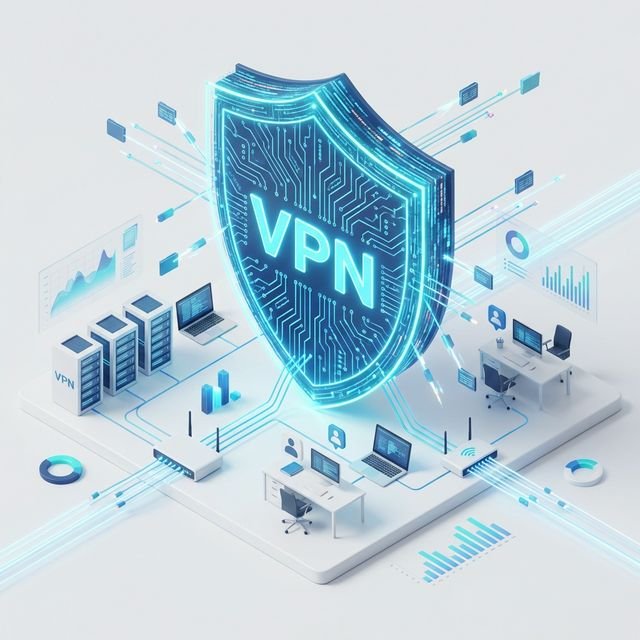
Choosing the right VPN for your small business is a critical security decision. A business VPN encrypts traffic between remote employees and company resources, protecting sensitive data from interception.
This guide compares eight business VPN solutions based on security features, ease of deployment, pricing, performance, and customer support.
Why Small Businesses Need a VPN
Remote and hybrid work arrangements are now standard for most businesses. Employees connect from home networks, coffee shops, airports, and coworking spaces. Each connection point is a potential attack surface.
A business VPN creates an encrypted tunnel between the employee's device and your network. This prevents eavesdropping, protects data in transit, and enables secure access to internal resources.
Beyond encryption, business VPNs provide:
- Centralized access control — Manage who can access which resources
- Activity logging — Maintain audit trails for compliance
- Network segmentation — Limit lateral movement if a device is compromised
- Geolocation flexibility — Enable access from any location without exposing internal infrastructure
What to Look for in a Business VPN
Before comparing specific products, understand the key evaluation criteria:
Security Protocol
Look for VPNs that support WireGuard or OpenVPN. Both are open-source, well-audited protocols. Avoid proprietary protocols that cannot be independently verified.
Kill Switch
A kill switch automatically disconnects internet access if the VPN connection drops. This prevents data from being transmitted over an unprotected connection.
Split Tunneling
Split tunneling lets you route only business traffic through the VPN while personal traffic uses the regular connection. This improves performance without sacrificing security for corporate resources.
Multi-Platform Support
Your VPN must support every operating system your team uses — Windows, macOS, Linux, iOS, and Android at minimum.
Centralized Management
A web-based admin console where you can provision accounts, manage permissions, and monitor usage saves significant time as your team grows.
No-Log Policy
Verify that the provider does not log user activity. A genuine no-log policy should be backed by an independent audit.
The 8 Best Business VPNs in 2026
1. NordLayer
NordLayer is the business-focused product from the team behind NordVPN. It offers a dedicated cloud VPN with a clean admin panel and strong security defaults.
Strengths: Easy deployment, automatic Wi-Fi protection, dedicated IP options, site-to-site connectivity.
Best for: Teams of 10-200 who need quick deployment without deep networking expertise.
2. Perimeter 81
Perimeter 81 provides a software-defined perimeter (SDP) approach that goes beyond traditional VPN functionality. It integrates zero-trust network access (ZTNA) principles.
Strengths: Zero-trust architecture, automatic Wi-Fi security, DNS filtering, multiple gateway locations.
Best for: Security-conscious organizations moving toward zero-trust networking.
3. Twingate
Twingate replaces traditional VPNs with a zero-trust access model. Instead of creating a network tunnel, it provides granular access to specific resources.
Strengths: No network reconfiguration required, per-resource access control, minimal performance impact.
Best for: Organizations that want resource-level access control without the overhead of managing VPN infrastructure.
4. Cisco AnyConnect
Cisco AnyConnect is an enterprise-grade VPN client backed by Cisco's security ecosystem. It integrates with Cisco's broader security infrastructure.
Strengths: Enterprise-grade reliability, deep integration with Cisco hardware, advanced threat protection.
Best for: Organizations already using Cisco networking equipment.
5. WireGuard (Self-Hosted)
WireGuard is an open-source VPN protocol that is lightweight, fast, and cryptographically modern. Self-hosting gives you complete control.
Strengths: Minimal attack surface, excellent performance, open-source codebase, free to use.
Best for: Organizations with in-house technical expertise who want full control over their VPN infrastructure.
6. Tailscale
Tailscale builds on WireGuard to create a mesh VPN that connects devices directly to each other. There is no central server to bottleneck traffic.
Strengths: Peer-to-peer connections, no infrastructure to manage, works behind NATs, simple setup.
Best for: Distributed teams that need device-to-device connectivity without managing servers.
7. OpenVPN Access Server
OpenVPN Access Server provides a self-hosted VPN solution built on the widely trusted OpenVPN protocol. It offers a web-based management interface.
Strengths: Proven protocol, self-hosted option, web admin interface, extensive documentation.
Best for: Organizations that want to self-host with an established and well-documented protocol.
8. Surfshark for Business
Surfshark's business offering combines consumer-friendly pricing with business features like centralized management and dedicated accounts.
Strengths: Competitive pricing, unlimited devices, clean interface, dedicated account management.
Best for: Cost-conscious small teams that need basic VPN protection without enterprise complexity.
Deployment Checklist
Once you select a VPN, follow this deployment process:
- Audit your network — Document current infrastructure and access patterns
- Define access policies — Decide who needs access to which resources
- Configure the VPN — Set up servers, clients, and access rules
- Test thoroughly — Verify connectivity, performance, and failover behavior
- Train your team — Provide clear instructions for connecting and troubleshooting
- Monitor and adjust — Review logs regularly and refine policies based on usage patterns
Frequently Asked Questions
Is a business VPN different from a personal VPN?
Yes. Business VPNs include centralized management, team provisioning, activity logging, and integration with corporate identity providers. Personal VPNs focus on individual privacy.
Can I use a free VPN for my business?
We do not recommend it. Free VPNs typically monetize through data collection, impose bandwidth limits, and lack the management features businesses need.
How many users does a small business VPN typically support?
Most solutions scale from 5 to several hundred users. Pricing usually scales per user per month.
Related Guides
Explore our guides on cybersecurity fundamentals, network security for small businesses, and GDPR compliance.